.svg)
.svg)


Hire an English Translator for Company Events in São Paulo
Organising a company event in another country is already enough to worry about without wondering whether anyone in the room will understand a word your speakers say. And in São Paulo, that worry is justified more often than foreign organisers expect. So if you are about to hire an English translator for company events in São Paulo, here is what we would want you to know first — as the company you might hire.
We work with international clients every week, and we have built everything around making that easy from a distance. You choose your own interpreter before you fly, from a profile with photo and voice. You pay in your own currency and receive a proper invoice your finance team can file, not an informal receipt. And you can actually reach us — replies inside your working day, one point of contact from the first email through the cleanup after your event. That is the part most foreign organisers are really asking about when they ask whether they can trust a supplier abroad, so we lead with it.
The rest of this page is the practical detail: what it really costs in 2026, how many interpreters your format needs and why, where your event will physically be, and how to pay from another country. Every number below is one you can take to any provider — if it saves you a planning mistake, good.
Send us your event details and get a quote →
Em resumo — the short version
- Our rates start at R$ 2,000 per day for a single interpreter. For events with an audience, a pair of simultaneous interpreters in São Paulo typically runs R$ 3,500–7,000 per event day across the market; rare languages add up to 50%, and equipment is separate.
- Everything is billed per day (a diária of up to 8 hours), not per hour — a two-hour session still costs a day.
- Team maths: two interpreters per language for simultaneous, rotating every 20–30 minutes; each extra language means another pair and another booth.
- Why it matters: Brazil ranks 81st of 116 for English proficiency; about 5% of Brazilians speak English, roughly 1% well.
- Paying from abroad: you can pay in your own currency and receive an official invoice your finance team can file.
- Choose your own: we send interpreter profiles — photo, background, voice sample — before you book.
Request an English translator for your São Paulo event →
The cost to hire an English translator for company events in São Paulo in 2026
Straight answer first, then the wider market so you can sanity-check any quote you receive.
Our own pricing starts at R$ 2,000 per day for one interpreter — the day rate for a single professional in consecutive or accompanying mode, covering meetings, workshops, factory visits and smaller sessions. From there it scales with the format below. The figures that follow are São Paulo market ranges rather than our price list, but they tell you whether a number you have been quoted is reasonable.
Simultaneous interpreting (conferences, launches, anything with an audience). A pair of interpreters costs roughly R$ 3,500 to R$ 7,000 per event day in São Paulo in 2026, with some providers quoting a tighter R$ 4,200 to R$ 5,000 for two interpreters across an eight-hour day. The spread reflects experience level and how technical the content is.
Consecutive and accompanying interpreting (meetings, workshops, factory tours). One professional, no booth, so materially cheaper — and for most working sessions it is the better format, not merely the cheaper one.
Equipment, charged separately by most suppliers. Portable transmitter-and-receiver systems start around R$ 2,200 per day; full booth setups for larger audiences run past R$ 7,900, usually including a technician and staff to hand out and collect receivers — which matters more than it sounds when 200 people all want a headset at once.
A worked benchmark. An eight-hour in-person event with two interpreters and equipment for up to 50 participants lands somewhere around R$ 7,400 to R$ 9,200 all-in, before extra sound reinforcement.
The multipliers. Rare languages — Mandarin, Arabic, Japanese — add up to 50%, because the qualified pool is small. Highly technical content sits at the top of each range. Anything outside the main urban centres adds travel and accommodation.
The rule that surprises everyone: it is billed per diária, a day of up to eight hours. A two-hour keynote costs a full day, because the interpreter blocks the date and turns down other work. The flip side is useful: a half-day and a full-day agenda often cost the same, so you may as well schedule the whole day.
How many interpreters does your company event actually need?
This is where event budgets are destroyed in both directions, and it is pure arithmetic once you know the three rules.
The rotation rule. Simultaneous interpreting needs two interpreters per language, rotating every 20 to 30 minutes. This is the international professional standard, not padding — interpreting while listening is cognitively brutal, and accuracy degrades sharply past roughly half an hour. A pair covers up to about six hours of live work.
The language-pair rule. Each language needs its own booth and its own pair. An event in Portuguese, English and Spanish is four interpreters and two booths, not "two plus a little." This is the single most common budget shock we see foreign organisers hit, and it is entirely avoidable by counting languages at planning stage.
The receiver rule. Equipment is priced mainly on how many receivers you need, so your audience count drives that cost more than the room does. A 60-person seminar and a 600-person congress are different orders of magnitude in the same venue.
Three worked examples:
- A 40-person workshop, English–Portuguese, one day: one interpreter in consecutive mode, no booth, maybe a portable system if people move around. Cheapest and usually correct.
- A 250-person congress, English–Portuguese, two days: two interpreters, one booth, 250 receivers, a technician, both days. See simultaneous interpreting and equipment.
- The same congress with Spanish added: four interpreters, two booths, two channels. Decide early whether the Spanish-speaking audience genuinely needs it.
Tell us your format and we'll size the team honestly →
The four São Paulo venues your company event is likely booked into
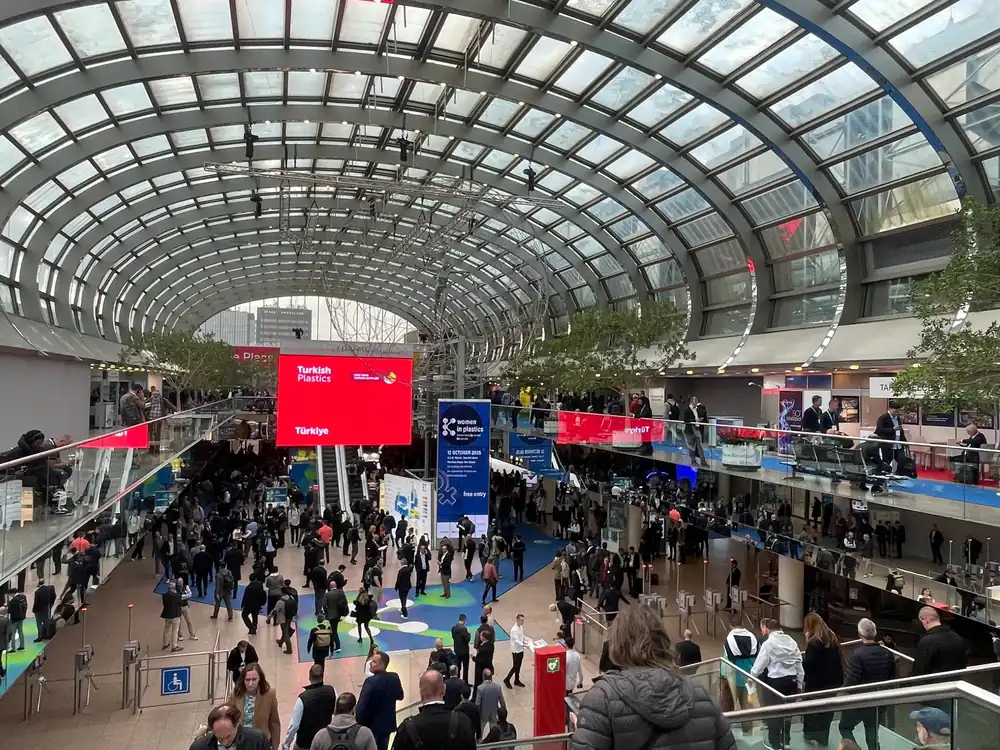
Four venues host most large corporate events in the city, and the difference between them can be an hour of everyone's day. Worth knowing before you block hotel rooms.
São Paulo Expo — southern zone, on the Rodovia dos Imigrantes. About 850 metres from Jabaquara metro and roughly ten minutes from Congonhas airport, with the largest covered car park in Brazil and, crucially, a location outside the rodízio zone — São Paulo's weekday rule that bars cars from the expanded centre at peak hours based on the last plate digit. If your delegates rent cars, that one fact may decide where they stay.
Distrito Anhembi — northern zone, Santana, now the largest event complex in Latin America. Reach it by Metro Line 1-Blue to Portuguesa-Tietê; driving from the southern business districts at peak can exceed an hour.
Transamerica Expo Center — southern zone, Santo Amaro. Around 100,000 m² across seven climate-controlled pavilions, 12 km from Congonhas and 42 km from Guarulhos international airport.
Expo Center Norte — northern zone, Vila Guilherme, with hotels immediately adjacent.
Two planning notes that catch people out. Hotel rates move with the event calendar: a mid-size fair pushes nearby rates up 20–40%, and a genuinely large event can move rates 40–100% across the whole city — book around 30 days out for normal pricing. And in-city ride-hailing typically runs R$ 25–45, so staying near the venue matters less than it would in a city with worse alternatives. A good interpreter knows all of this, and a late arrival at Anhembi because someone routed through the centre at 8am has already cost you the opening session.
Do you even need an English translator for your São Paulo event?
Sometimes the honest answer is no — and we would rather say so than sell you a day you did not need. If your entire audience is the São Paulo office of a multinational where everyone reports abroad, you may be fine. That exception is narrower than most organisers assume.
The data behind the rule: Brazil ranks 81st of 116 countries on the EF English Proficiency Index, in the "low proficiency" band. Around 5% of Brazilians speak English at all; roughly 1% speak it well. One published study of Brazilian professionals and students found over 80% reporting no English at all.
For an event, the risk is specific. Your speakers may be bilingual, but your Brazilian audience is not, and an audience that cannot follow the content politely disengages rather than interrupting. You will not see the failure in the room — you will see it in the feedback forms, the questions that never come, and the partnerships that do not follow. For a company spending real money to be in São Paulo, that is an expensive way to save on interpreters.
Which format fits which company event?
Match the format to the room, not to the invoice.
Conferences, congresses and product launches
An audience, a stage, a schedule that cannot slip. Simultaneous interpreting from a booth, audience on headsets, two interpreters per language. Apply the maths above before setting the budget.
Meetings, negotiations and workshops
A table and genuine back-and-forth. Consecutive interpreting: no equipment, no lag, maximum accuracy on the points you will later sign. Our business interpreter in São Paulo page covers this in depth.
Trade fair stands
Fast consecutive and whispering, on your feet, for hours — visitors stop for minutes and decide fast. Return is measured in leads, not words. See our event interpreter in São Paulo page.
Factory tours and site visits
Walking, over machine noise, through dense technical vocabulary. Accompanying interpretation, plus a portable system once the group grows.
Hybrid and remote sessions
When head office joins by video or a session follows after you fly home, remote interpreting covers it with no travel and no equipment hire.
If your event also generates documents — signage, a printed programme, contracts to sign on site — that is written technical translation, a separate service we handle alongside the live work.
An interpreter company that works internationally is safer to hire from abroad
You asked the question every foreign organiser asks: why trust a supplier you have never met, in a country you do not know? Fair. Here is the honest answer.
The risk in hiring from abroad is that all your usual signals disappear — no referral, no local reputation you can read, no coffee beforehand. A company built to work with international clients closes that gap in ways a one-off freelancer cannot:
You choose the person before you commit. We send profiles of the interpreters available for your dates — photo, professional background, and a voice sample — and you pick. Almost no provider in this market shows you their people that openly, and that willingness is itself a signal.
There is a backup. With a network of more than 700 professionals across 25+ languages, if an interpreter falls ill the night before your event, someone equally qualified steps in. Book a lone freelancer from another continent and you have a single point of failure on the one day that cannot fail.
You pay in your own currency, with a proper invoice. Foreign clients frequently hit two frictions in Brazil: managing the exchange, and ending up with a receipt finance cannot book as a legitimate expense. You get a formal written quote in advance, payment in your own currency, and an official invoice your accounting department can file — the difference between hiring a name off a listing and engaging a supplier procurement will approve.
You can actually reach us. International work means replies inside your working day, not on a lag — a real point of contact from planning through the cleanup after the event, and documentation that meets your head office's standards. Traduzme is run from Brazil under European-led management, and our clients come from both sides of the Atlantic; among the feedback published on our site, the CEO of a German logistics company noted we delivered ahead of deadline with clear communication and close attention to detail, and a creative director called our interpreters essential to the success of his event.
One contract covers interpreters and equipment together, an NDA is signed before any material is shared, and — because we pay our interpreters properly — the strong ones stay with us and prepare thoroughly. That is also why we are comfortable showing you exactly who you are getting before you book.
The Portuguese that will not translate the way you expect
A short linkable aside, because it is the kind of thing a good interpreter is quietly worth, and the kind of detail organisers remember.
Brazilian professional communication is relationship-first and avoids blunt refusal. A literal rendering hands you the words and loses the meaning. "Vamos ver" (let's see) can be genuine interest or a soft no. "A gente se fala" (we'll talk) may be a real commitment or a graceful goodbye. "Está complicado" usually means no, said politely. And a meeting that opens with fifteen minutes of coffee and family talk is not wasting your time — that is the meeting, and cutting it short reads as cold. Knowing which norm is a norm and which is a warning sign is not something you can research on the ride from Guarulhos, and it is exactly the judgement you are hiring.
Booking your English translator for a São Paulo event: the right lead time
Two to four weeks is comfortable, and the constraint is preparation as much as availability. Booked three weeks out, your interpreter reads your programme and speaker materials, builds a glossary for your sector, and arrives knowing your event. Booked Thursday for Monday, they arrive fluent but cold — and on technical content, the audience hears the difference.
Book earlier for three situations: major fairs and congresses, when the strongest professionals in a language are committed months ahead and hotel rates are already climbing; rare languages such as German, Mandarin, Japanese or Arabic, where the pool is small; and large multi-language conferences, where you are coordinating several interpreters, booths, receivers and a technician with a venue rather than making a phone call. Last-minute requests are usually still possible — we handle them regularly — but the earlier you commit, the more of the network you get to choose from.
Hire your English translator for company events in São Paulo
You are investing real money to hold an event in São Paulo. The interpretation is not where to gamble.
To get an accurate quote fast, tell us:
- The dates, the venue if you have it, and whether the agenda moves around the city
- The format — conference, launch, fair stand, workshop, factory visit, training
- How many people need to follow the interpretation, and how many languages
- Your industry, plus any programme or speaker material we can brief the team on
- Any second audience language, such as Spanish for Latin American attendees
What happens next: we recommend the format and team your event actually needs — including when that is less than you expected — send profiles for you to choose from, brief your chosen interpreters under NDA, and confirm everything in a written quote payable in your own currency against an official invoice.
See the profiles and hire your English translator in São Paulo →
Or reach us on WhatsApp +55 (61) 99803-8363 — Monday to Saturday, 8am to 6pm (São Paulo time) — or write to oi@traduzme.com.br.
São Paulo is where most international business in Brazil gets done: it is Latin America's largest financial centre and home to AmCham Brasil, the largest American Chamber of Commerce outside the United States. If your agenda continues beyond the city, see our Portuguese interpreter in Brazil overview.


.svg)

.webp)