.svg)
.svg)


Portuguese Interpreter in Brazil: Professional Language Support for Business Travelers, Trade Fairs and Site Visits
You're flying to São Paulo next month for Hospitalar. You have meetings booked in Rio with potential distributors. Your team needs to audit a supplier's facility in Curitiba. You're attending a major industry conference in Brasília — and you've just realized something most foreign visitors discover too late: only about 5% of Brazilians speak English with any proficiency, and less than 1% are truly fluent.
That number, published by the U.S. Department of Commerce in its official Brazil business travel guide, is not a marketing line. It's the working reality. Even at executive levels and in international companies, English fluency in Brazil is far lower than visitors from the U.S., Canada, the U.K., Germany, or Northern Europe typically expect.
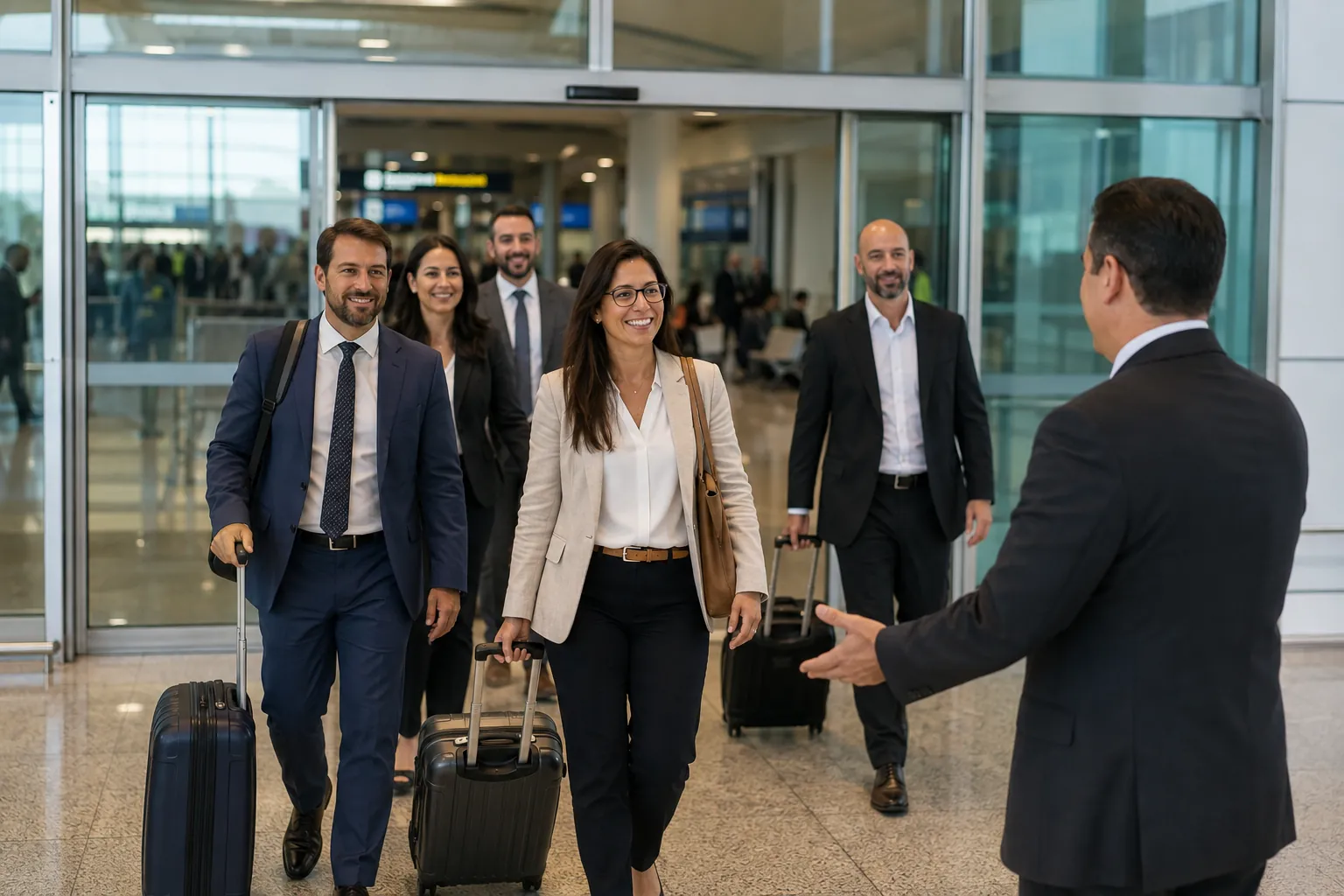
This is exactly where we come in. Traduzme provides professional Portuguese interpreters for foreign business travelers, executives, delegations, and companies entering or operating in the Brazilian market. We support meetings, trade fair visits, factory inspections, audits, negotiations, and conferences across all major Brazilian business hubs — in over a dozen language pairs.
Send us your trip details and get a quote within hours →
Brazil rewards business travelers who come prepared. A skilled Portuguese interpreter is not a luxury — it's the difference between a productive trip and a confusing one. The cost of one missed deal far exceeds the cost of professional language support for a full week.
Why English alone won't get you through a business trip in Brazil
Let's be honest about something that surprises many first-time visitors.
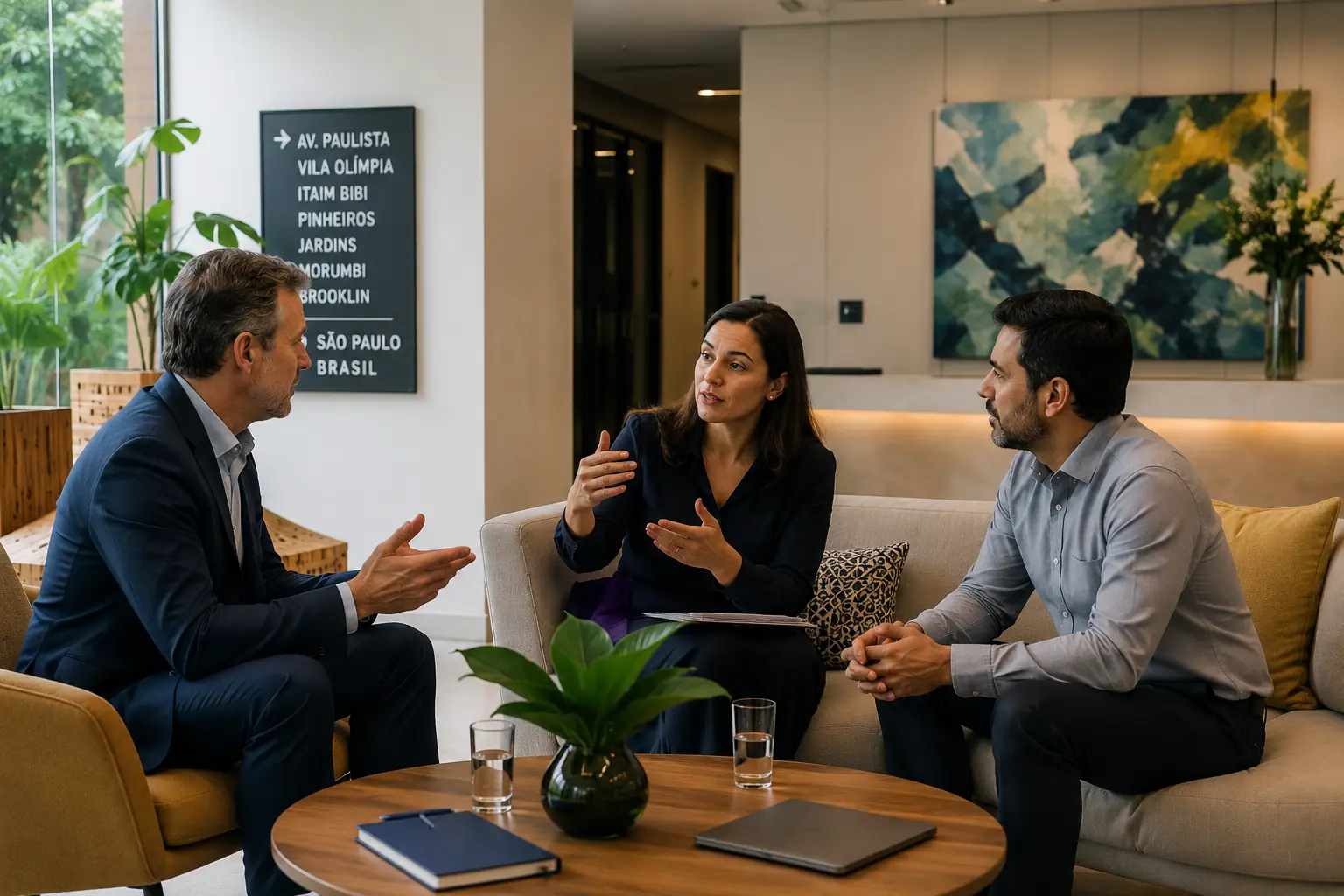
Brazil is the largest economy in Latin America, the seventh-largest in the world, and one of the most active markets for international trade in the Western Hemisphere. Yet despite this scale, English proficiency among Brazilian professionals remains low by global standards. The country's business culture has been built primarily in Portuguese, and most Brazilian executives — even at senior levels of major companies — are far more comfortable conducting substantive negotiations, technical discussions, and contract reviews in their native language.
What that means in practice:
- In meetings, your Brazilian counterparts may understand basic English but struggle to fully express nuanced positions, technical concerns, or contractual reservations. Important details get lost.
- At trade fairs, exhibitors at smaller booths often have no English-speaking staff at all. The interesting suppliers are not always at the big, English-friendly stands.
- At factory and site visits, technical staff and floor managers usually speak only Portuguese. Quality discussions, process questions, and inspection findings lose precision when filtered through whoever happens to speak some English.
- In legal, financial, and regulatory contexts, Portuguese is the working language without exception, regardless of how international the firm is.
Add to this another common misconception: many visitors from Spanish-speaking countries assume they'll manage with Spanish. They won't, in business contexts. Portuguese and Spanish share roots, but the differences in pronunciation, vocabulary, and especially in business and technical terminology are significant enough that critical information is regularly misunderstood.
A professional interpreter is the single most cost-effective decision a foreign business traveler can make for a Brazil trip.
Who we work with
Three main groups, with overlapping needs:
Foreign companies entering or operating in the Brazilian market. Multinational executives visiting their Brazil office, headquarters teams meeting with local management, due diligence teams evaluating an acquisition target, sales leaders meeting with Brazilian partners and distributors.
Foreign visitors attending Brazilian trade fairs and conferences. Hospitalar (medical), Agrishow (agribusiness), Fispal (food), Equipotel (hospitality), ABF Franchising, Couromoda (footwear), Fenatran (transportation), Brasil Offshore and Rio Oil & Gas, FIESP industrial events, and many more. Brazil hosts hundreds of major B2B trade fairs each year, and serious foreign attendees almost always benefit from interpreter support.
Companies sending delegations or technical teams to Brazil. Trade missions organized by chambers of commerce, technical inspection teams, regulatory audit teams, supplier qualification visits, joint venture exploration trips.
Foreign procurement and sourcing teams. Buyers visiting Brazilian suppliers — particularly in agriculture, mining, industrial equipment, automotive parts, food processing, footwear, fashion, furniture, cosmetics, and renewable energy. The supplier landscape in Brazil is vast, but mostly Portuguese-speaking.
Legal and financial professionals. Foreign attorneys handling depositions, arbitrations, or contract reviews in Brazil. Investment bankers and PE teams in due diligence. Compliance officers conducting investigations or audits in Brazilian operations.
Foreign media, journalism, and documentary teams. Filming in Brazil, conducting interviews, accessing sources who don't speak English.
If you recognize your situation in any of these, send us your trip details — we'll respond within hours with a clear proposal.
What we provide: services for inbound business travelers in Brazil
Our core service is on-site escort interpretation (also called accompanying interpretation): a qualified professional accompanies you throughout your trip and interprets in real time, primarily in consecutive mode (the speaker pauses, the interpreter delivers the translation, then the conversation continues). For larger groups or specific contexts, we also provide:
- Simultaneous interpretation with portable equipment ("bidule") for factory tours and group visits
- Conference interpretation with full booth setup and a team of interpreters for larger events
- Liaison interpretation for small meetings and one-on-one conversations
- Phone and video remote interpretation for follow-up calls or remote meetings before or after your trip
We also support written translation for related materials — contracts, technical documentation, presentations — so the same project can be handled end-to-end.
In every assignment, we work as a language partner, not just a service provider. That means: pre-trip briefing, glossary preparation when the subject matter requires it, cultural context awareness, and continuity through the engagement.
The Brazilian business cities we cover
Our interpreter network is concentrated in the cities where international business actually happens in Brazil. The main hubs:
Interpreters in São Paulo
São Paulo is the financial and industrial capital of Brazil and the single most important destination for foreign business travelers. The city hosts the largest concentration of multinational headquarters, the major B2B trade fairs at venues like Expo Center Norte, São Paulo Expo, Anhembi, and Distrito Anhembi, the FIESP industrial federation, the financial district of Faria Lima and Itaim, and most of the country's M&A and consulting activity. Our largest interpreter team is based here, with deep specialization across industries.
Interpreters in Rio de Janeiro
Rio is the second major business hub, with strength in oil and gas (Petrobras and the offshore industry), media and entertainment, mining, ports and logistics, and increasingly in technology and renewable energy. Major events like Rio Oil & Gas and Carnival-related corporate gatherings draw substantial international attendance each year.
Interpreters in Brasília
The federal capital is where regulatory, governmental, and international diplomatic business happens. Foreign visitors meeting with ministries, regulatory agencies (ANVISA for health, ANP for petroleum, ANEEL for electricity, ANATEL for telecommunications), embassies, or development banks (BNDES) regularly need Portuguese interpreter support with experience in institutional and regulatory environments.
Interpreters in Belo Horizonte and the Minas Gerais industrial corridor
Mining (Vale, CSN, Usiminas), automotive (Fiat/Stellantis), and a strong industrial base. Foreign procurement teams, mining sector visitors, and automotive supply chain delegations frequently work in this region.
Interpreters in Curitiba and the South
Curitiba, Joinville, and Caxias do Sul host strong industrial activity in automotive, mechanical engineering, agribusiness, and manufacturing — with significant German, Italian, and Japanese industrial heritage. Foreign technical visitors, especially from Europe, frequently visit suppliers in this region.
Interpreters in Porto Alegre
Strong in agribusiness, footwear (the Couromoda exhibitor base), wine, and increasingly in technology. Gateway to the Mercosur — visitors traveling on to Argentina or Uruguay sometimes start here.
Interpreters in Recife, Salvador, Fortaleza and the Northeast
Renewable energy (wind and solar), tourism, ports, and increasingly the offshore wind industry. Foreign visitors in renewables, infrastructure, and tourism investment work in these markets.
Interpreters in other Brazilian cities
Goiânia, Manaus (Free Trade Zone, electronics), Florianópolis (technology), Campinas (technology and biotech), Ribeirão Preto (agribusiness center), and others — covered on demand. Tell us where you're going.
Brazilian trade fairs where we provide interpreter support
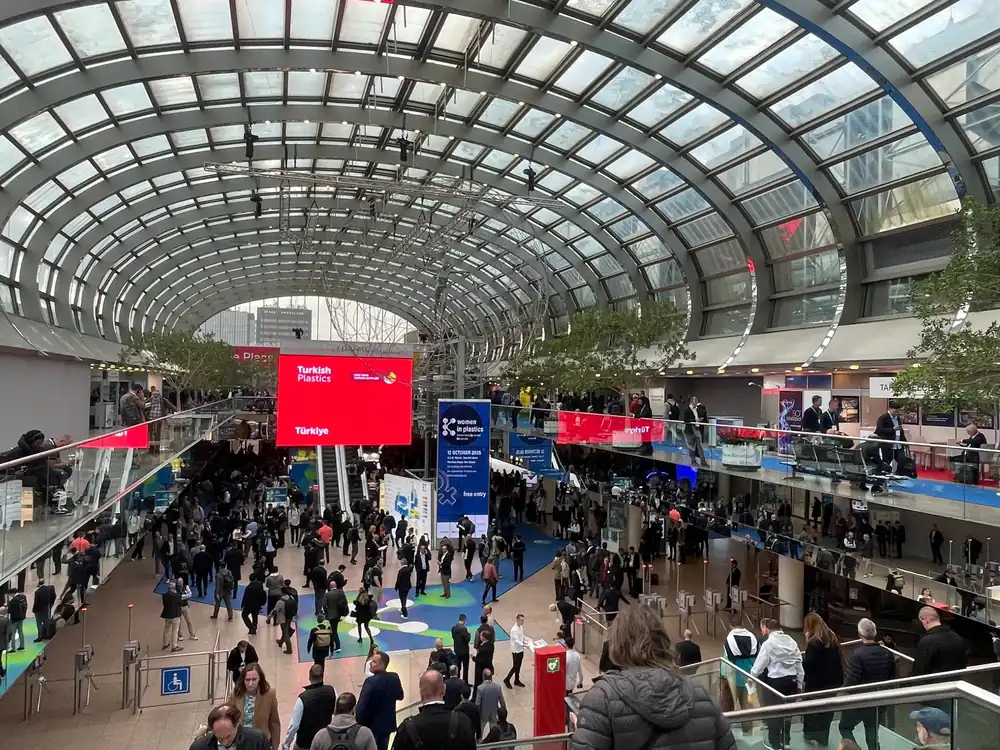
Trade fairs are one of the most common reasons international visitors come to Brazil — and one of the highest-value contexts in which a professional interpreter pays for itself many times over. The most relevant for our foreign clients:
Hospitalar — São Paulo
Latin America's largest healthcare and hospital equipment trade fair. Held annually in São Paulo, it draws thousands of international visitors from medical equipment manufacturers, distributors, hospital management firms, and health technology companies. Substantial volume of small and mid-size Brazilian suppliers without English-speaking staff.
Agrishow — Ribeirão Preto
Latin America's largest agricultural technology fair, held annually in the heart of Brazil's agribusiness region. Foreign visitors from agricultural machinery, agritech, biotechnology, and agricultural inputs find essential value in interpreter support — agricultural Portuguese has its own vocabulary that even fluent speakers don't always handle well.
Fispal Food Service and Fispal Tecnologia — São Paulo
Major events for food service, food technology, and food industry equipment. Foreign visitors from food processing equipment manufacturers, ingredient suppliers, and food service brands.
Equipotel — São Paulo
Major hospitality industry event covering hotel equipment, food service for hospitality, and operations technology. Drawing increasing attendance from foreign hospitality groups expanding in Latin America.
ABF Franchising Expo — São Paulo
Brazilian franchising market is one of the most active globally. Foreign brands evaluating Brazilian master franchise opportunities, and Brazilian brands looking for international expansion partners, both attend.
Couromoda — São Paulo
The largest footwear, leather goods and fashion accessories trade fair in Latin America. Held in São Paulo at Expo Center Norte. Foreign buyers in footwear and fashion.
Fenatran — São Paulo
Major event for transportation, logistics, trucking, and commercial vehicles. Foreign visitors from logistics, supply chain, and commercial vehicle industries.
Brasil Offshore and Rio Oil & Gas — Rio de Janeiro
Brazil's offshore oil and gas industry is one of the largest in the world (Petrobras, pre-salt). These events draw enormous international attendance — equipment suppliers, services companies, energy majors, and renewables increasingly co-attending.
Intermodal South America — São Paulo
Logistics, transport, foreign trade, and supply chain. Significant participation from international logistics and shipping companies.
And many others
Movelpar (furniture), Inspiramais (footwear design), FCE Pharma (pharmaceutical equipment), Feicon Batimat (construction), Tecnocarne (meat industry), and dozens of vertical events. Whatever fair you're attending, send us the dates and the topics covered — we'll match you with an interpreter familiar with the sector.
Languages we cover for inbound visitors
Our largest demand is Portuguese ↔ English, but we work in many language combinations directly into Brazilian Portuguese:
English ↔ Brazilian Portuguese
By far our largest service line. Interpreters with experience across industries — finance, healthcare, engineering, agribusiness, oil and gas, technology, legal, manufacturing, and more.
Spanish ↔ Brazilian Portuguese
For visitors from Latin America (Argentina, Chile, Colombia, Mexico, Peru), Spain, and other Spanish-speaking markets. As mentioned earlier, the language gap between Portuguese and Spanish is wider than visitors typically expect, especially in business and technical contexts.
German ↔ Brazilian Portuguese
Strong demand from German companies in automotive, machinery, chemicals, pharmaceuticals, and industrial equipment — all sectors with major German presence in the Brazilian market (BASF, Bosch, Siemens, Volkswagen, ZF, Mercedes-Benz, and many more).
French ↔ Brazilian Portuguese
For French companies (Renault, L'Oréal, Carrefour, Engie, Air Liquide), as well as Belgian, Swiss, and African Francophone visitors.
Italian ↔ Brazilian Portuguese
Italian industrial and design heritage in Brazil is significant. Strong demand for Italian-speaking interpreters in machinery, fashion, food, and automotive sectors (Fiat/Stellantis is one of the largest manufacturers in Brazil).
Mandarin Chinese ↔ Brazilian Portuguese
Rapidly growing demand as Chinese investment in Brazil expands across infrastructure, energy, mining, agriculture, electronics, and electric vehicles.
Japanese, Korean, Arabic, Dutch, Russian, and others
Available on demand, with adequate advance notice. The supply of qualified interpreters in these pairs is smaller in Brazil, so earlier booking is recommended.
How we work: a practical process for inbound clients
Straightforward. Five steps:
1. You send us your trip details. Cities, dates, types of meetings or events (trade fair, factory visit, executive meetings, audit, conference), industry, working languages, and any relevant context. By our quote form, or directly via WhatsApp.
2. Within hours, you receive a proposal. Suggested interpreter (with a profile summary), language pair, recommended interpretation mode (consecutive, simultaneous with equipment, or mixed), daily rate, hours of coverage, and conditions.
3. You approve. We confirm and brief. A pre-trip briefing aligns the agenda, glossary if applicable, sector context, and goals of the trip. This briefing significantly improves the quality of the interpretation.
4. Your interpreter is with you on the ground. Throughout the agreed agenda — meetings, fair visits, site inspections, dinners. Working in real time, maintaining professional neutrality, and helping with cultural nuance when relevant.
5. Post-trip continuity. For follow-ups arising from the trip — written translation of documents, communication with new contacts, sworn translation if legally needed — we remain available.
A note on Brazilian business culture (relevant to your trip)
A few things worth knowing — these directly affect how a trip to Brazil works in practice, and how your interpreter contributes:
Pace is slower than North American or Northern European norms. Brazilian executives generally value relationship building before transaction. Important deals are rarely closed by phone or email — in-person meetings matter. Plan for multiple meetings rather than expecting to wrap things up in one visit.
Personal connection is part of the work. Casual conversation, shared meals, and a degree of personal warmth are normal in Brazilian business meetings. This is not "wasted time"; it's how trust gets built.
Punctuality varies. Foreign visitors are expected to be punctual. Local counterparts may be less so, particularly in São Paulo where traffic is consistently challenging. Build buffer time into your day.
Hierarchy matters. Decision-making in many Brazilian companies is more centralized than in flat-organization cultures. Make sure you're meeting with people who can actually decide, not just convey.
Continuity of the relationship is valued. Brazilian companies often prefer to deal with the same person across multiple visits rather than rotating teams. This applies to interpreters too — when possible, we maintain the same interpreter across recurring trips for the same client.
A good interpreter will not only translate words but help you read the room — when "yes" really means "yes," when polite phrasing is hiding a concern, when it's the right moment to push or wait. That contextual layer is part of what you're paying for.
What an interpreter in Brazil actually costs
Let's be clear, because many foreign clients ask up front.
There is no fixed market rate in Brazil for interpretation services. The cost depends on objective factors:
- Language pair. English ↔ Portuguese is the most accessible (largest pool of qualified professionals). German, Italian, French sit at intermediate rates. Mandarin, Japanese, Korean, Arabic typically run higher due to smaller supply in Brazil.
- Mode. Consecutive interpretation is the standard for accompanying work. Simultaneous interpretation requires equipment and typically a team of two interpreters working in shifts (international standard for stamina and accuracy).
- City and travel. Engagements in São Paulo or Rio are generally easier to staff. Smaller cities or remote sites may include travel time and per-diem expenses.
- Duration and intensity. Multi-day engagements typically have a better daily rate than single-day work. Long days (over 8 hours) involve overtime considerations.
- Sector specialization. Highly technical work (medical, legal, oil & gas, financial) carries different rates than general business interpretation.
As a general reference, the Brazilian National Union of Translators (SINTRA) publishes reference rates that many professionals and agencies use as a starting point. For a typical full-day consecutive interpretation engagement in São Paulo or Rio in English ↔ Portuguese, daily rates in the Brazilian market generally fall within a range that, in U.S. dollar terms, is competitive compared to Western European or U.S. domestic rates — and substantially less than the cost of a misunderstood deal or a wasted trip.
The right way to get an accurate number for your specific situation is simple: send us your trip details and we'll respond with a clear proposal in hours. No commitment.
If your trip also involves equipment (simultaneous interpretation booth, headsets for factory tours), we can arrange that as well — covered in our dedicated interpretation services page.
Why work with us
Plainly, what we offer:
Interpreters specialized by sector and context. Trade fair work is different from factory inspection, which is different from boardroom negotiation, which is different from regulatory hearings. We allocate professionals by fit, not by availability.
Coverage across major Brazilian business cities. São Paulo, Rio, Brasília, Belo Horizonte, Curitiba, Porto Alegre, and others. We don't require you to fly an interpreter from elsewhere when there's a qualified professional on the ground.
More than 12 working language pairs into Brazilian Portuguese. English, Spanish, German, French, Italian, Mandarin, Japanese, Korean, Arabic, Dutch, Russian, and others on demand.
Pre-trip briefing as standard. Not extra. We study your agenda, glossary, and sector context before your interpreter shows up.
Confidentiality by contract. NDAs are standard for any engagement. For sensitive matters (M&A due diligence, regulatory investigations, IP-related discussions), additional terms are available.
Direct, human communication. Real people responding by email and WhatsApp. Time zones are not an obstacle — we're used to coordinating with international clients across U.S., European, and Asian time zones.
Continuity across visits. When you come back to Brazil, we can put the same interpreter on your project. Glossary and sector context carry over.
Clear, transparent pricing. No hidden fees, no surprises. You know what you're paying before the trip starts.
Ready to plan your trip with professional language support?
If you're reading this, you're probably planning a trip to Brazil — or already booked — and you've realized that handling the language side professionally is going to make a significant difference.
What happens when you send us your trip details:
✓ Response within hours with an initial assessment✓ Suggested interpreter with clear professional profile✓ Detailed quote: daily rate, travel logistics, equipment if needed✓ Pre-trip briefing included✓ NDA available before any sensitive material is shared✓ On-the-ground support throughout the engagement
Request a quote for Portuguese interpreter services in Brazil →
Or contact us directly via WhatsApp +55 (61) 99803-8363 — Monday through Saturday, 8 a.m. to 6 p.m. Brasília time.
To learn more about our full interpretation service line, see our interpretation page. For document translation related to your visit (contracts, technical documentation, presentations), see our technical translation services.


.svg)

.webp)